Making a specialist model maker look as precise as the models
Paper Plane is a Bangalore business that builds aviation scale models, defence equipment replicas and functional prototypes for institutions, schools, museums, events and private clients. The work is precise and often engineered to move, light up or demonstrate a mechanism. The challenge was a website that shows that, and gets a serious buyer to a scoped quote request without publishing a price.
View LiveSerious work that buyers cannot try before they enquire.
Lead with the models, label them like drawings, end on one quote request.
A six-page site a buyer can judge in one visit.
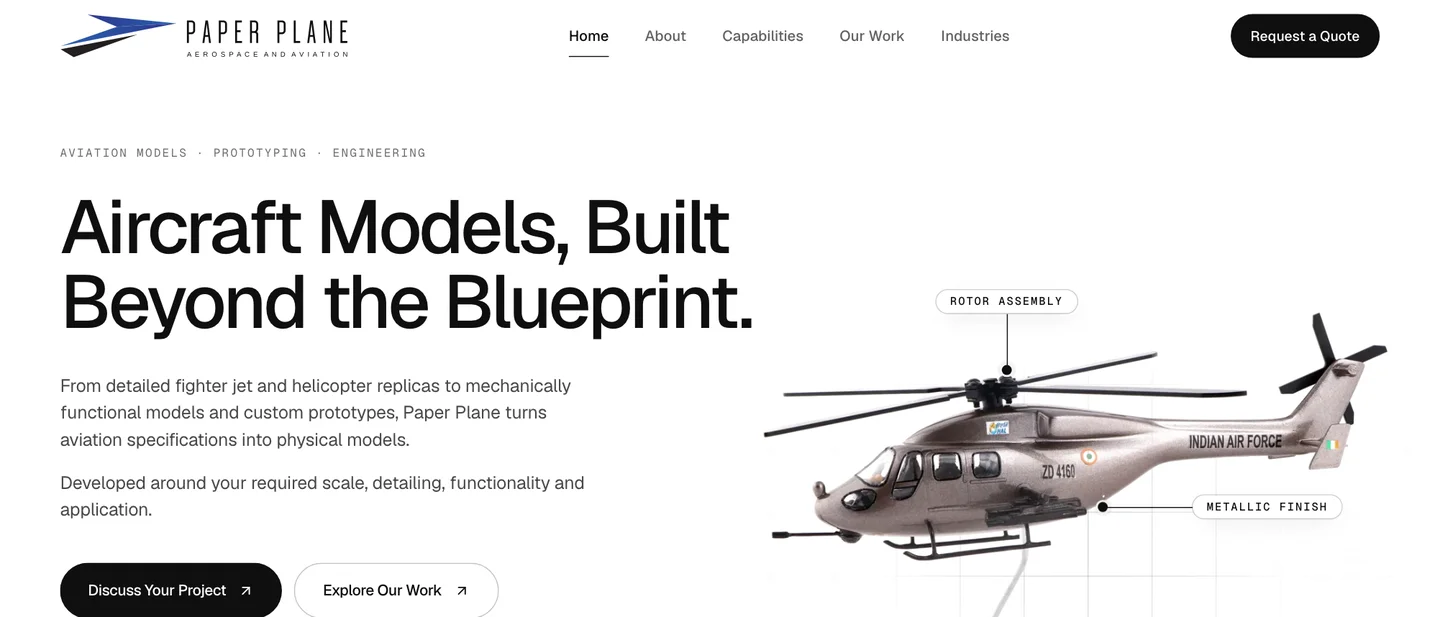
The models were precise. The first impression had to be too.
Buyers here cannot test a model before they enquire, so the site has to do the proving.
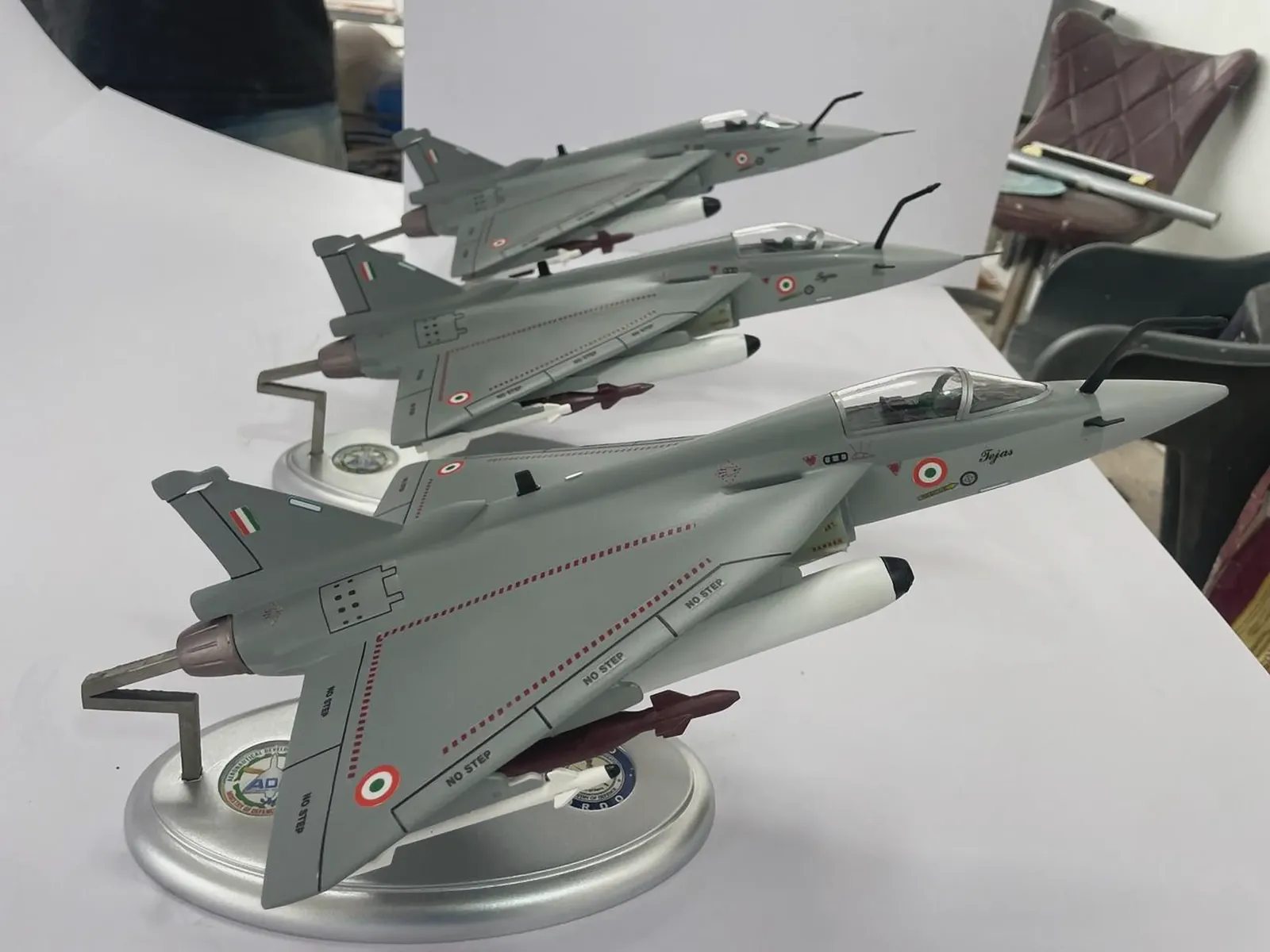
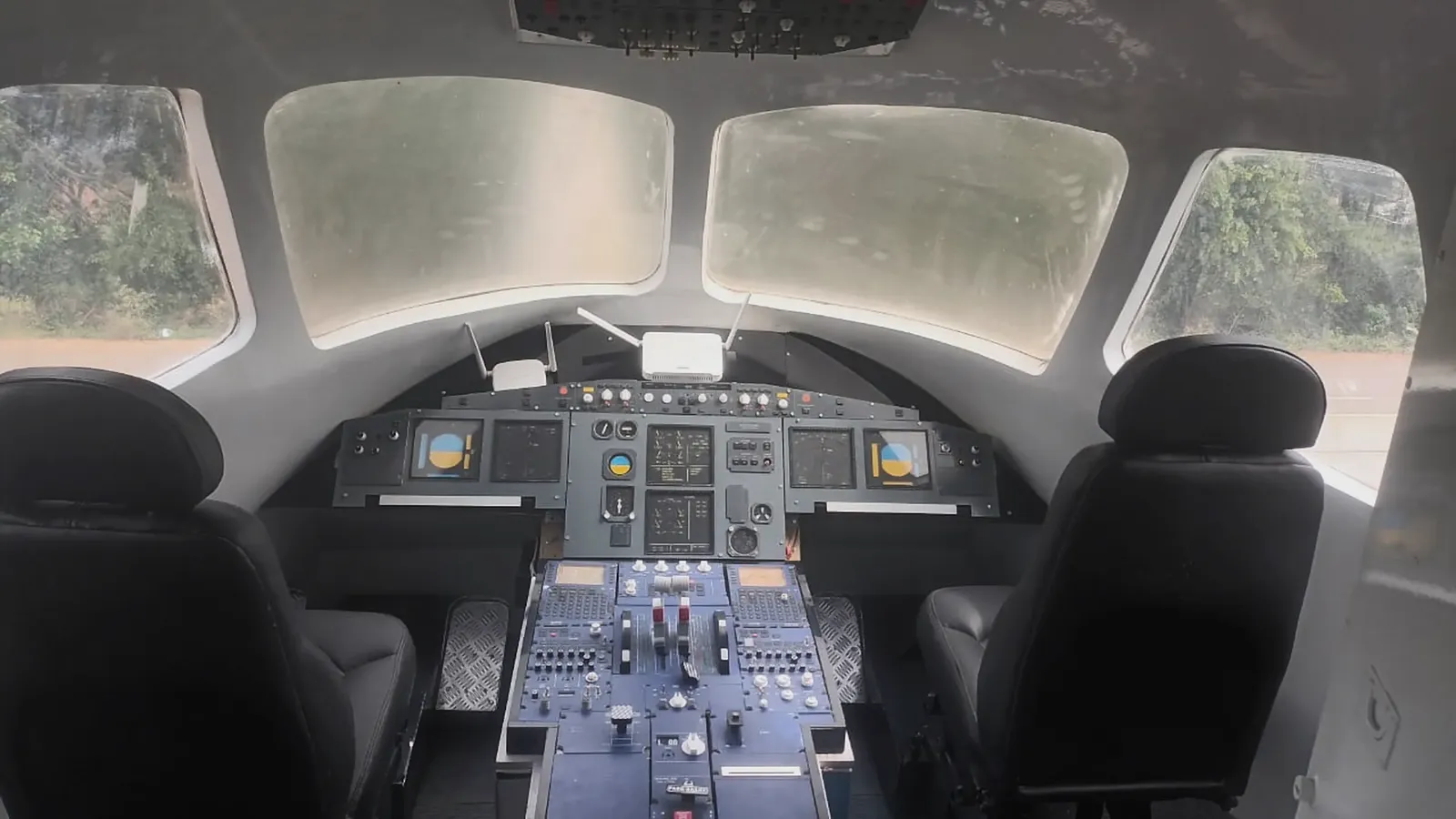
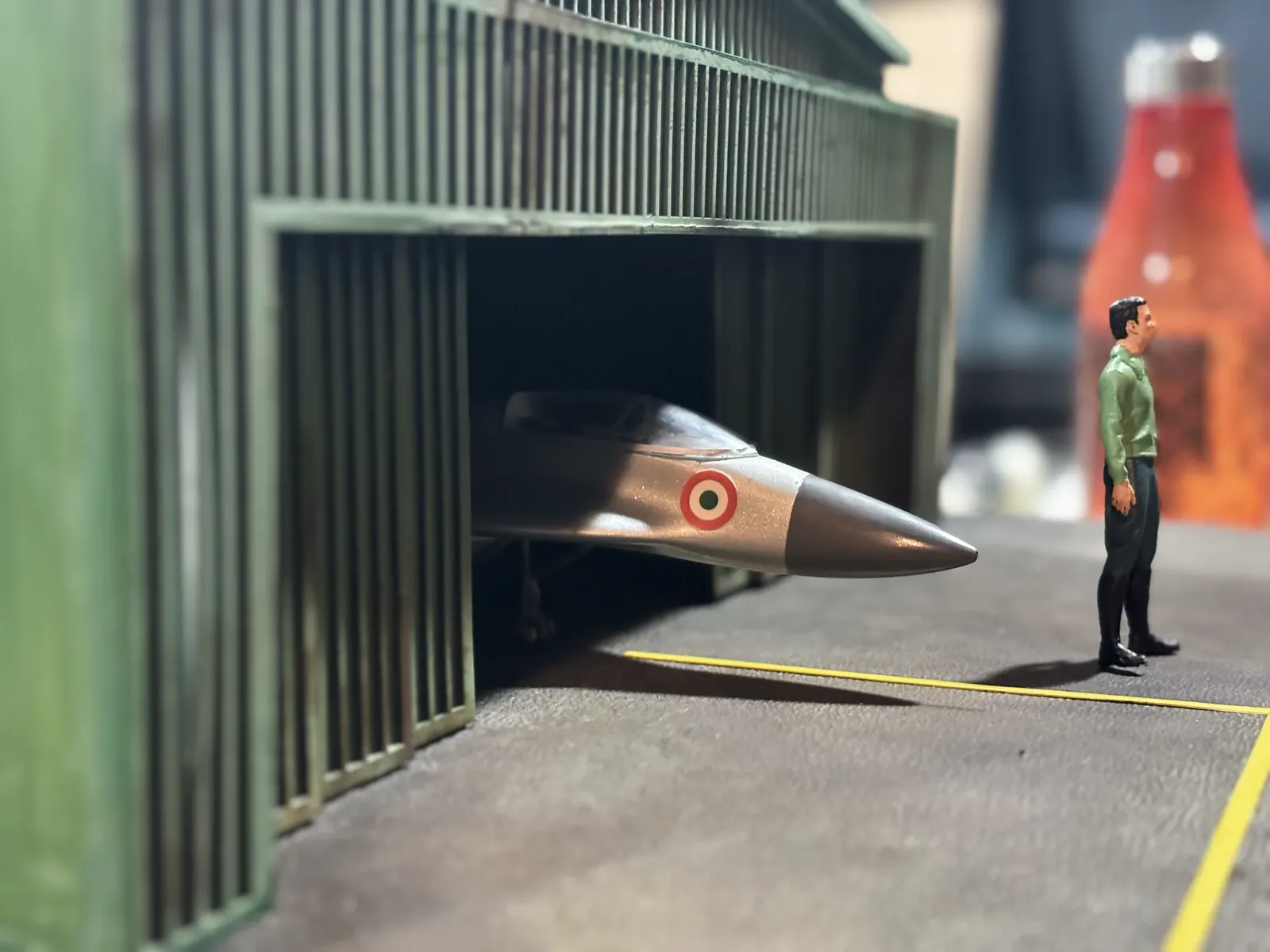
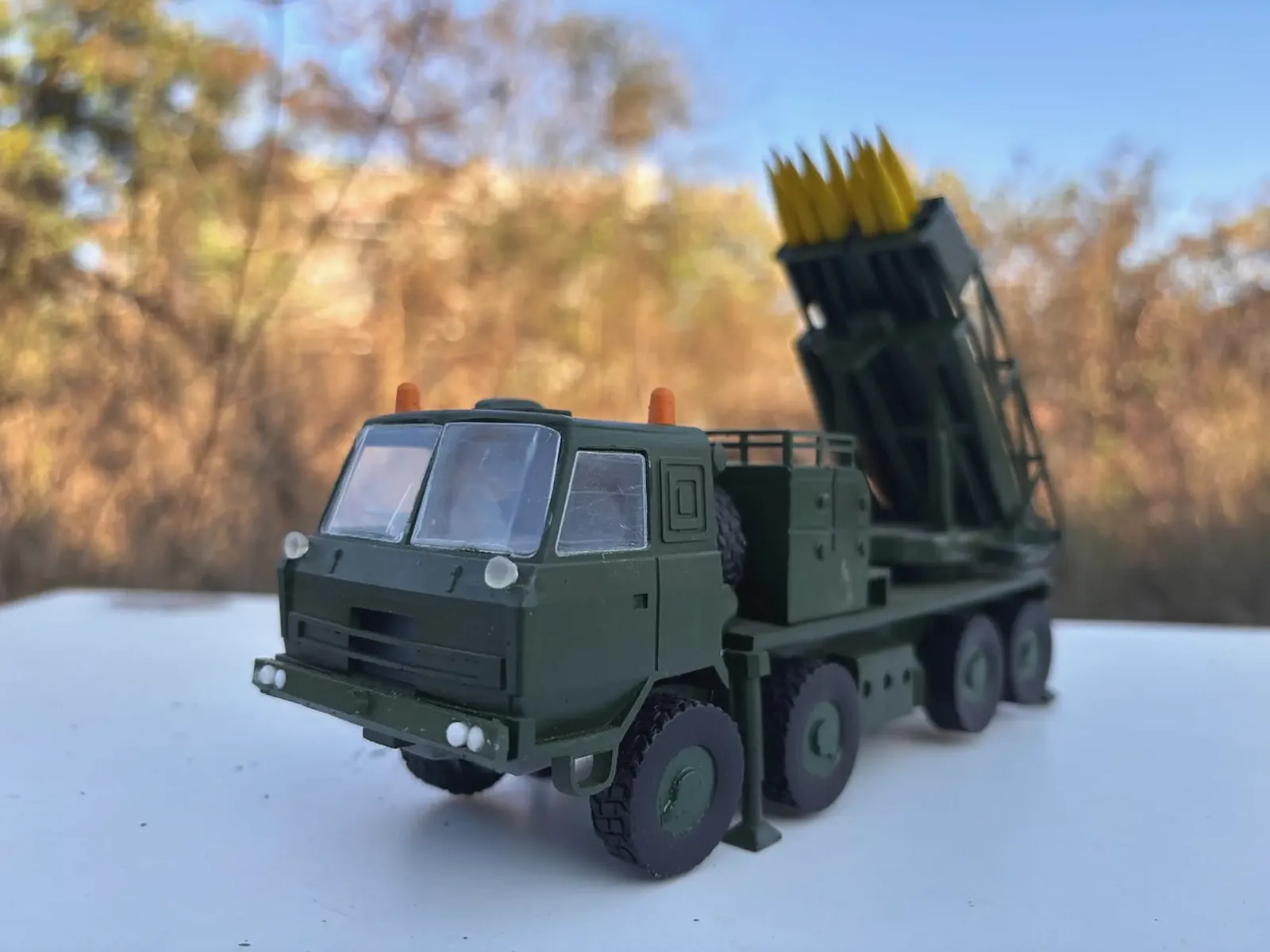
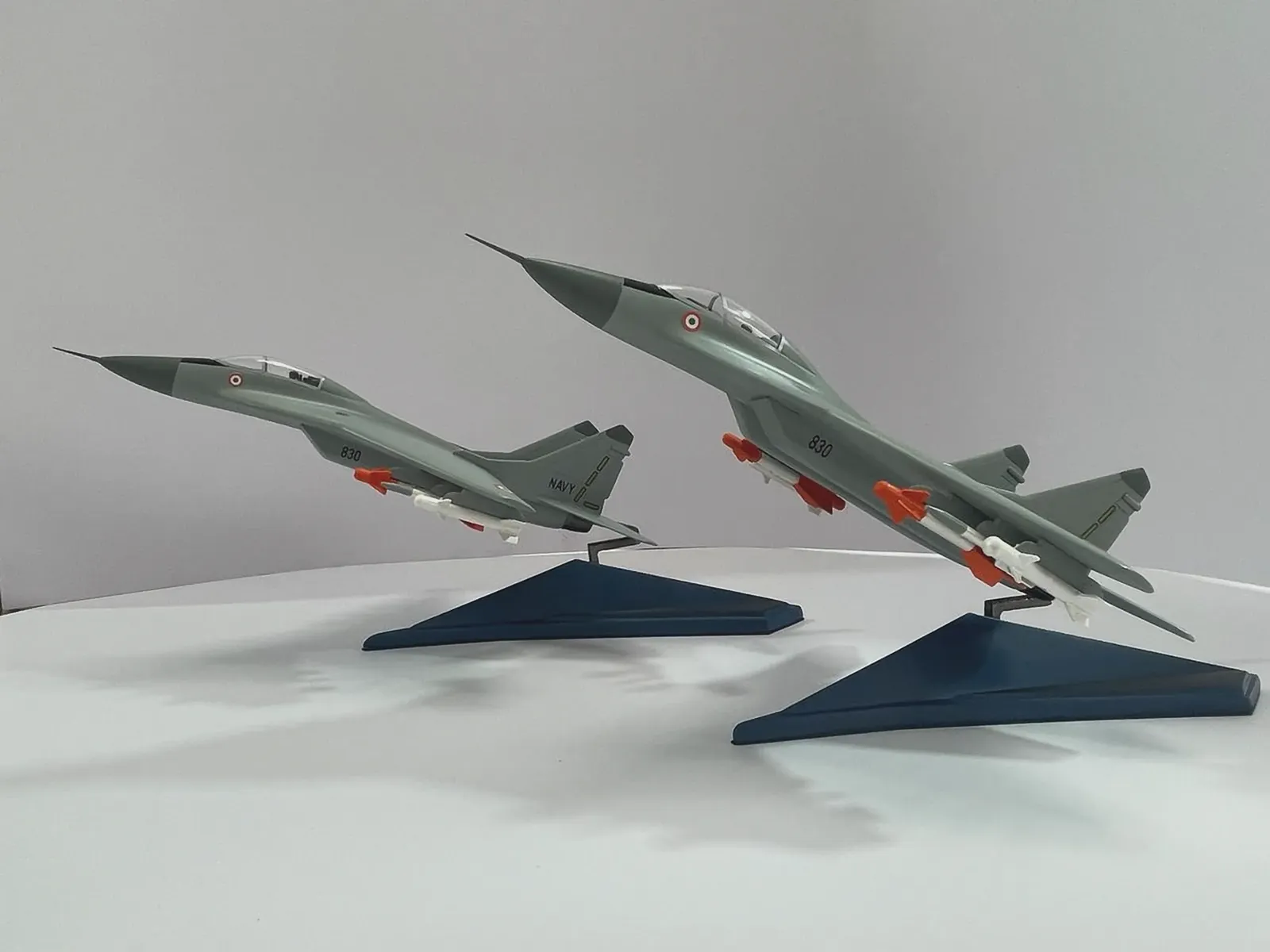
Institutionwants to know it is capable and approved to publishEducator or curatorwants a model that explains somethingProducerwants a custom build to a briefBuyer types taken from the Industries page. Illustrated, not a persona study.
Understand, evaluate, then ask
Six pages in the order a cautious buyer thinks: who are you, what can you build, show me, is it for my field, how do I ask.
Design questionWhat does a stranger need to see, in what order, before they will send a quote request for a custom model? The structure below is built from the live site.
Understand
Who they are and how they work
- Home
- Hero model with labelled parts
- What we create (4 kinds)
- Institutional experience
- Scale and functionality
- Selected work, industries, process
- About
- Who we are, expertise
- Experience in numbers
- Philosophy, the business behind it
Evaluate
Capability, proof and fit
- Capabilities
- Aircraft & helicopter models
- Defence equipment models
- Functional & semi functional
- Custom engineering prototypes
- Approach in three steps
- Our Work
- 15 projects, 5 groups
- Filter by category
- Each tagged static, functional or full scale
- Industries
- 6 fields, each with applications
Act
One clear ask, on every page
- Request a Quote
- Step 1: your details
- Step 2: project information
- Step 3: tell us more
- Direct email and two phone numbers
- Header button
- Request a Quote, always visible
- Page endings
- Discuss Your Project
Built from the live site. Each column is a stage of the visit, each box is a page, and each line under it is a section or step.
Two journeys, one way to ask
Different buyers arrive with different certainty, but both end at the same short request.
Institutional buyer: from a requirement to a quote
Someone sourcing a display or demonstration model- ArriveLand on the homepageProof firstA real model with labelled parts, then the institutions the work is associated with
- CheckRead what is builtPlain categoriesFour kinds of model named by what they are, not by process
- VerifySee the workScope in the tagEach project says static display, functional or full scale
- ConfirmCheck the industry fitTheir field, namedDefence & Military has its own page and applications
- AskRequest a QuoteThree short stepsDetails, project information, then anything else
- Follow upTeam replies on feasibility
Educator, curator or producer: from an idea to a brief
Someone with a concept, not a specification- ArriveLand on Industries or HomeFit named earlyEducation, museums, events and film each have a plain description
- RecogniseSee their use caseApplications listedTeaching aids, galleries, installations, production sets
- ImagineBrowse functional workFunction explainedLanding gear, rotors, wings and lighting, subject to feasibility
- UnderstandRead the processNo surprisesFive steps, including a 3D render before manufacturing
- AskRequest a QuoteNo spec neededThe form is built for a drawing or an idea
- ReviewVisualisation and approval
Steps follow the live site. The notes under each step explain the design choice.
Three decisions that did the work
Each decision answers a question a buyer cannot ask out loud.
Lead with the object, labelled like a drawing
The first screen has to say “engineered”, not “hobby”. Should it use a slogan, a collage or one model?
Say what is static and what moves
Scope is the buyer’s biggest unknown. A jet on a stand and a rotor that turns are very different jobs.
Quote-led, with the process in plain sight
There is no price to publish. The risk is a buyer who sees no next step, or too big a first step.
What the solution looks like
Black, white and one fine grid, so the models carry the colour.
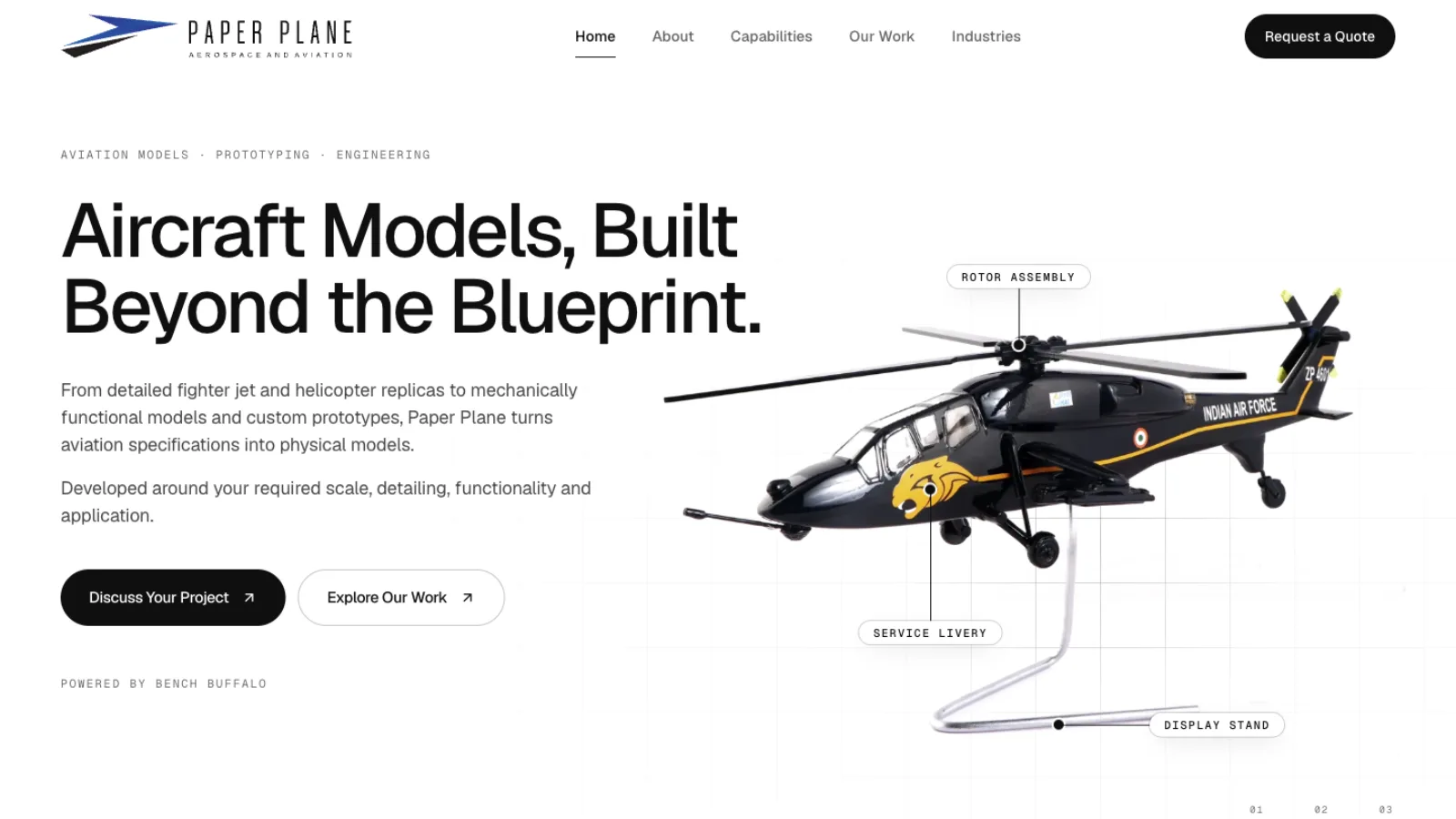 12345
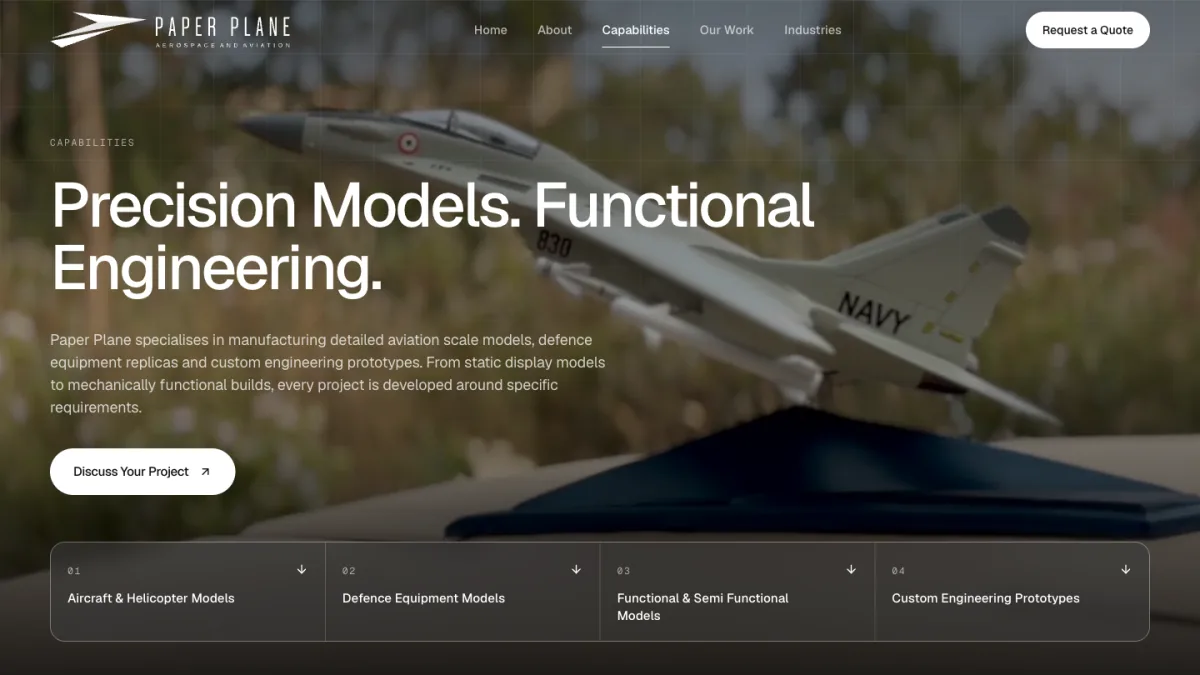
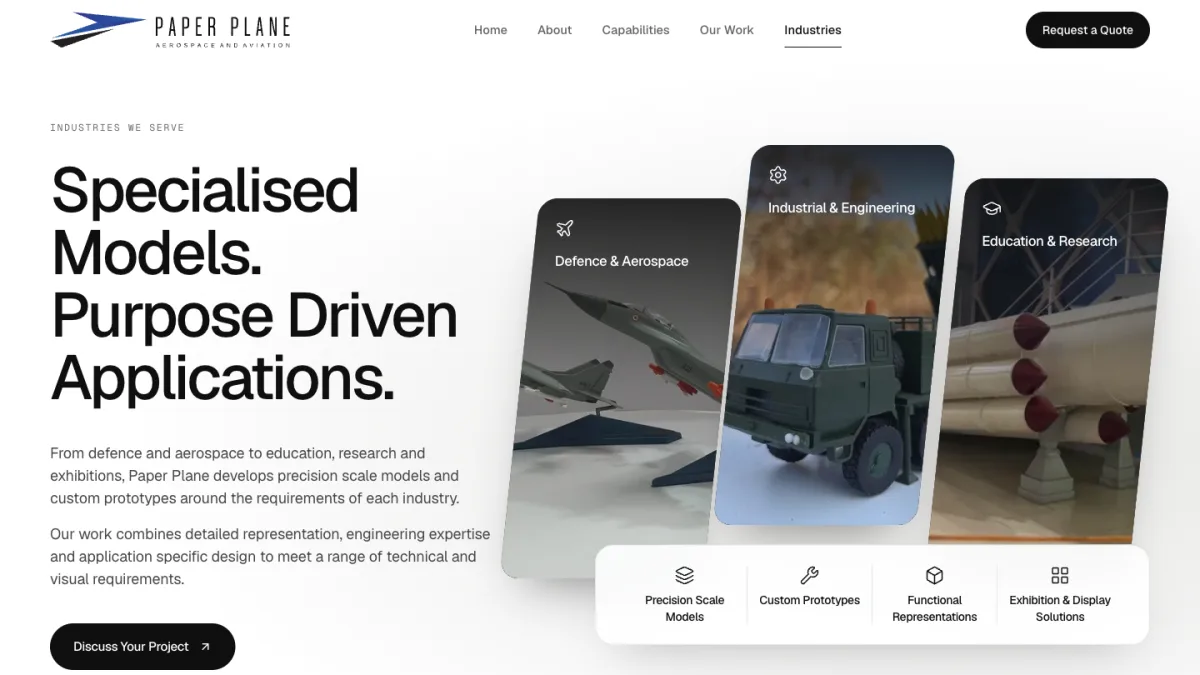
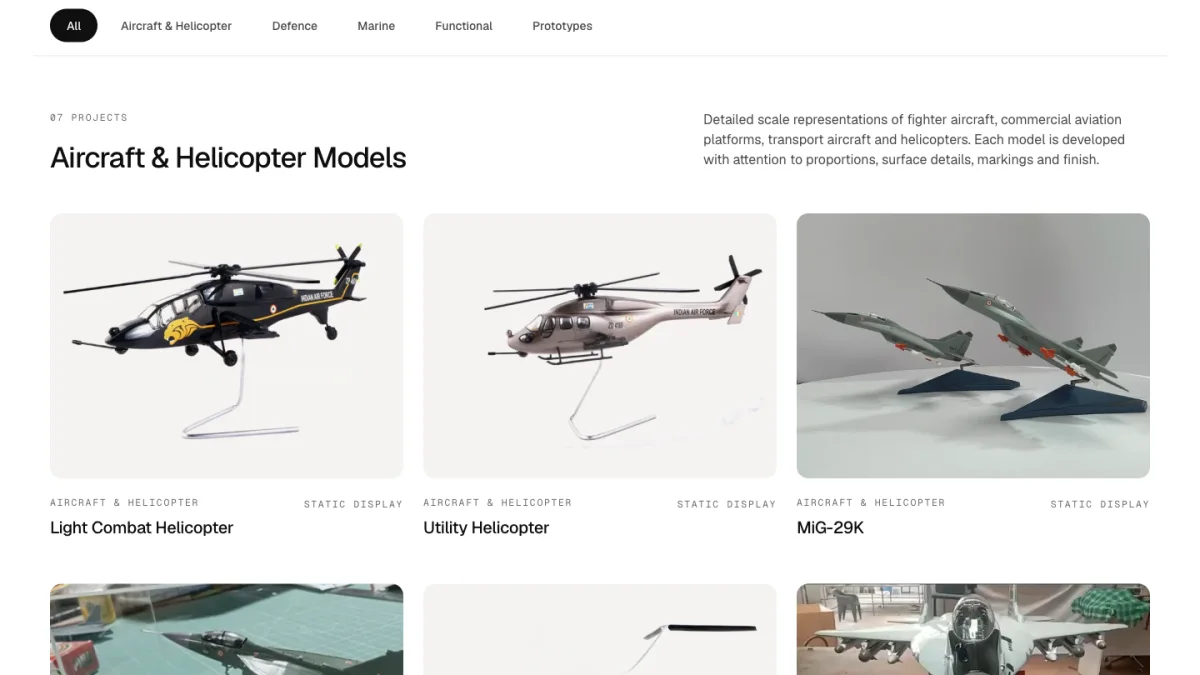
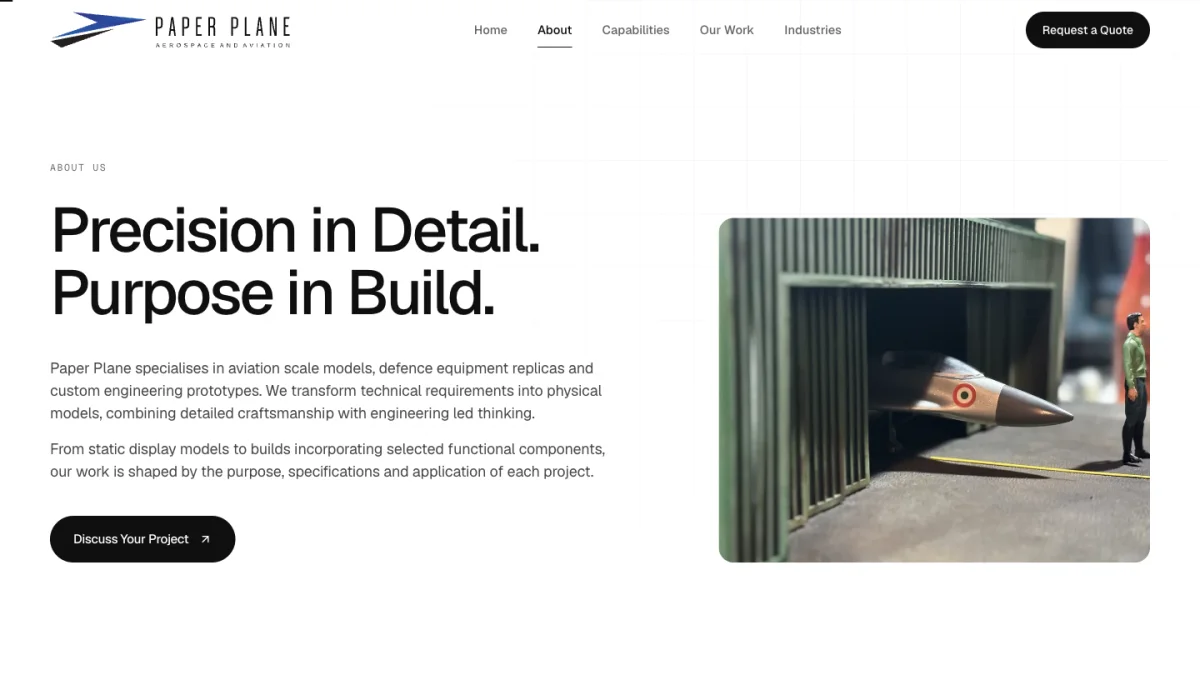
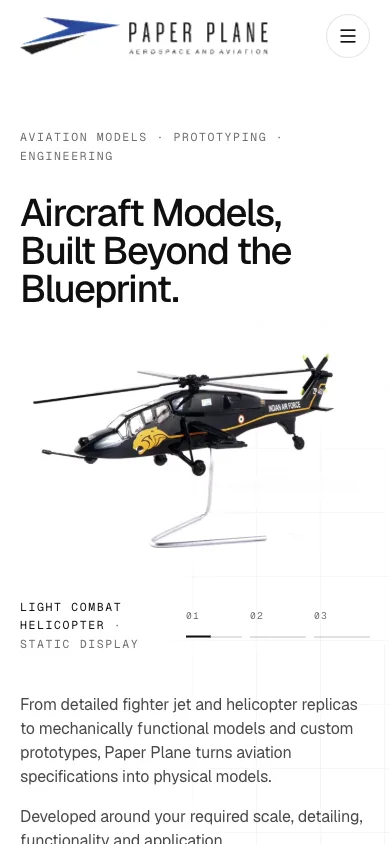
From a name to something a stranger can check
A buyer can now see the work, size the scope and ask, without a phone call first.
A buyer’s path without a clear site
- Hears about Paper Plane
- Looks for something to check
- Cannot see the range, finish or scale
- Cannot tell if a moving model is possible
- Has to phone to find out anything
- Enquires blind, or does not
A buyer’s path on the site
- Lands on a real model, labelled like a drawing
- Reads the four kinds of model
- Browses 15 projects, each tagged by type
- Finds their own industry named
- Reads the five-step process
- Sends a three-step quote request
carried on the site as proof
across five categories
Showing real work with its scope tagged. Every other choice, from the grid to the form, only helps once a buyer believes the models are real and knows what they are asking for.
What I can and cannot claim. The 3,000+ models, six years and team size are Paper Plane’s own figures, shown on the site. They describe the business, not the effect of the redesign. I do not have enquiry or conversion data yet, so I am not claiming one. The institutions named on the site are listed as experience associated with the business, and specific project references are shown only where permission to publish is confirmed.
Graphite, paper and a mono label
Measured from the live site, paperplane.business. A drawing-sheet palette with annotation-style labels.
Typefaces
Geist
Headlines and buttons at weight 500, tracked at -0.04em.
500 / 400
Geist Mono
Labels and part callouts, capitalised and spaced out.
400
Type scale
- Headline · 75 / 75 · 500 · -0.04em
Aircraft Models, Built Beyond the Blueprint.
- Section heading · 50 / 52 · 500 · -0.035em
One Specialisation. Multiple Applications.
- Button · 14 / 20 · 500
Request a Quote
- Label · 11.5 / 18 · 400 · +0.14em · caps
Aviation models · Prototyping · Engineering
Spec shows the real size and line-height. Samples above 24px are compressed to fit.
Colour, in proportion
- White#FFFFFF · Page · ~49%
- Graphite#151515 · Dark sections · ~22%
- Paper#F4F3F1 · Bands · ~22%
- Rule grey#E4E4E4 · Dividers · ~3%
Shares are by on-screen area. The logo blue, #2B51A1, is the only brand colour and appears in the logo.
Type
Geist at weight 500 for everything large, and Geist Mono for labels, so metadata reads like an annotation on a technical drawing.
Colour
Graphite, white and a warm paper grey. Colour stays out of the way so the model photography supplies it.
Hierarchy
A 75px headline against an 11.5px mono label is a steep ratio. The labels recede and the product images lead.